

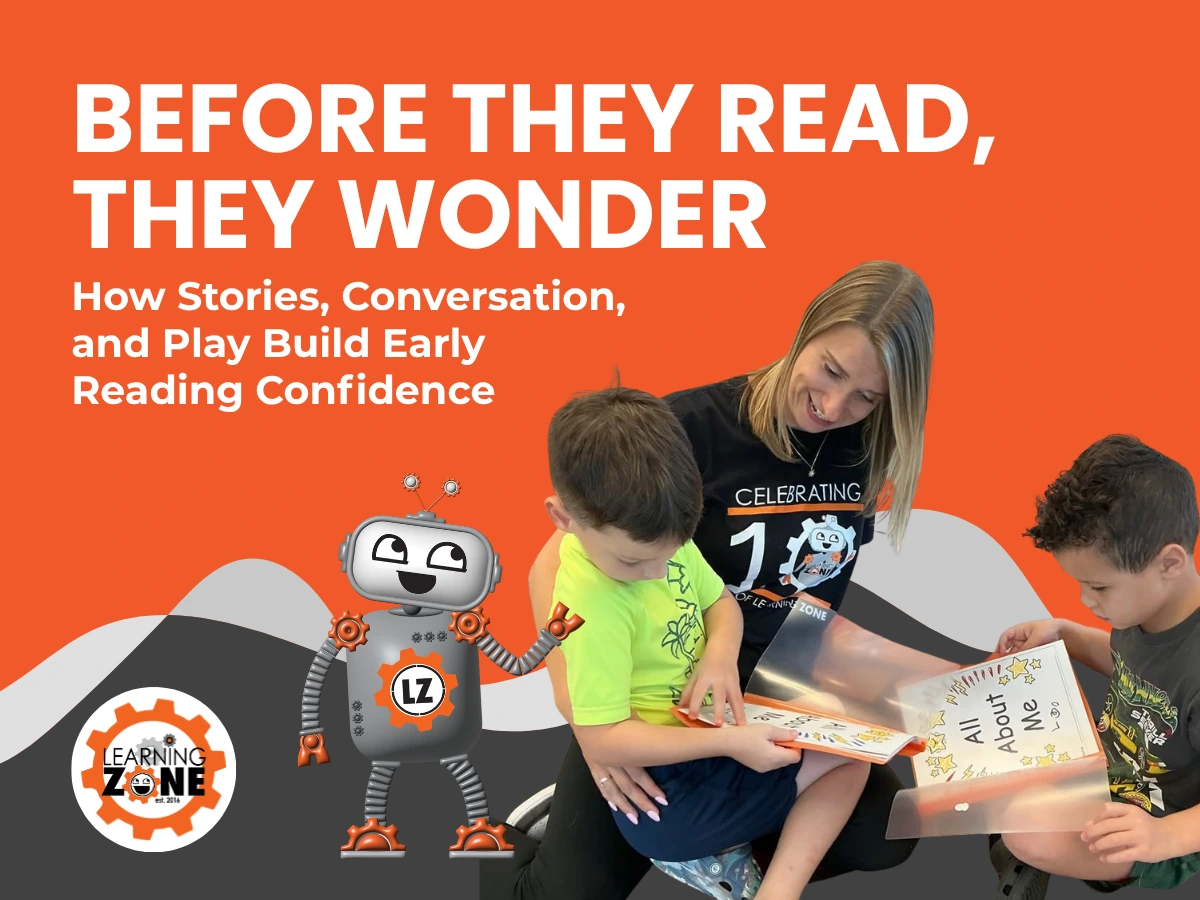
Long before a child sounds out their first word, they are already becoming a reader. You can see it in the toddler who “reads” a favorite book from memory, or the preschooler who spots the first letter of their name on a cereal box and shouts it across the kitchen. These small moments are at the heart of what strong preschool programs in Mount Juliet, TN quietly nurture every day. Reading confidence doesn’t begin with a test or a worksheet. It begins with curiosity, conversation, and the belief that words are worth exploring.
If you’ve ever wondered whether your little one is “on track,” we understand that worry. The reassuring truth is that early reading grows through everyday experiences, and you’re likely already helping it along without even trying.
Emergent literacy is a simple idea wrapped in an academic-sounding name. It describes all the ways children begin building a relationship with language before they read independently.
Think of it as the foundation beneath a house. You don’t see it once the walls go up, but everything rests on it. For young children, that foundation is built through:
None of this looks like formal reading. That’s exactly the point. A child who loves talking, listening, retelling, and pretending is building the kind of foundation that early literacy grows from.
Before children read words, they need to fall in love with them. And that love begins in conversation.
When you talk with a preschooler about their day, describe what you see on a walk, or answer their endless “why” questions, you’re doing something powerful. You’re feeding their vocabulary, one exchange at a time.
Children who hear rich, varied language build a stronger foundation for later reading; one that supports vocabulary, comprehension, and growing confidence with words.
Autumn happens to be a wonderful season for this. The world suddenly offers new things to name and notice. A child might describe a leaf as crunchy or rough, wonder why the air feels chilly, or compare which pumpkin is larger. Each of these moments stretches their language a little further.
At Learning Zone, meaningful conversation isn’t an afterthought. It’s woven through the day, because talking, listening, and being truly heard are how children learn that their ideas matter.
A read-aloud is far more than entertainment. When it’s done well, it becomes a two-way exchange.
The magic isn’t just in the words on the page. It’s in the pauses. A teacher might ask, “What do you think happens next?” “Why do you think she did that?” or “Has that ever happened to you?” Questions like these turn a story into a shared adventure and give children opportunities to practice prediction, memory, and comprehension without ever realizing they’re “working.”
Here’s what that kind of story time gently builds:
A seasonal picture book might spark a conversation about changing leaves or a family trip to pick apples. The book becomes a doorway, and the conversation is where the real learning lives.
Some of the richest opportunities for language can happen during pretend play.
When children set up a make-believe restaurant, they create menus, take orders, and negotiate who plays which role. When they act out a favorite story, they retell it in their own words. This kind of play gives language a genuine purpose. Children have real reasons to speak, listen, explain, and invent, and they encounter meaningful print along the way.
This is one of the most overlooked truths about early reading: imagination and literacy grow together. A child inventing dialogue for two stuffed animals is practicing storytelling. A child scribbling a “shopping list” is discovering that marks on paper carry meaning. It looks like play, and it is. It’s also literacy in motion.
At Learning Zone, our proprietary C3 Curriculum shapes learning around three simple ideas that fit early literacy beautifully.
You can see how naturally reading fits inside this rhythm. Curiosity opens the door, creativity keeps children engaged, and comprehension is where understanding takes root. Guided by the Tennessee Early Learning Developmental Standards, C3 spans infancy through Pre-K, and to your child it simply feels like purposeful play.
The difference isn’t any single activity. Plenty of children can look at a picture book or scribble on paper. What matters is what caring adults help them notice, question, describe, and understand while they do it.
Materials and books matter, but the people beside your child matter more.
At Learning Zone, our teachers are called Education Engineers, and the name is intentional. In literacy-rich moments, that can mean introducing an interesting new word, asking a thoughtful question, or simply giving a child enough time to find the words they want to share. They help little ones connect spoken language with the experiences right in front of them.
The goal isn’t to rush a child toward the answer. It’s to help them stay with a question a little longer, to wonder out loud, and to feel that their thinking is worth sharing. That patience is where real confidence is built.
Many parents measure readiness by a single question: Can my child read yet? It’s an understandable worry, but it’s also an incomplete picture.
For families thinking about kindergarten readiness in Mt. Juliet, TN, Learning Zone’s Pre-K approach focuses on three important foundations: early literacy, math foundations, and executive function. Literacy is broader than sounding out words. A child who is ready to thrive often shows readiness in quieter ways:
Notice how few of these involve independent reading. Confidence, communication, and comprehension come first. When those are strong, they form the kind of foundation that gives early reading somewhere solid to grow.
If you’re looking for a place where your child can grow into a confident communicator, we’d love to welcome your family. Our Preschool Programs in Mount Juliet, TN bring together everything that helps early literacy flourish: conversation, stories, imaginative play, and the guidance of caring Education Engineers, all shaped by our C3 Curriculum.
Located at 1004 Pleasant Grove Place, our NECPA-accredited center welcomes children from six weeks through Pre-K, with hours from 7:00 a.m. to 6:00 p.m., Monday through Friday. We keep families closely connected through the Procare app, with photos, updates, and teacher notes throughout the day, so you always know how your little one is doing. Secure keypad entry and video monitoring are part of how we support your peace of mind.
For families comparing daycare in Mt. Juliet, TN, what sets us apart isn’t a longer checklist of skills. It’s how we help children fall in love with language before formal reading begins, so they step into kindergarten feeling curious, capable, and ready.
Reading confidence begins long before a child reads a full sentence independently. Sometimes it starts with “reading” a favorite book from memory, recognizing one familiar letter, or discovering that the marks they make on paper can carry meaning. Those small moments are part of becoming a reader, too.
Autumn is a beautiful season to watch that confidence take root. Schedule a tour or request more information today, and let us show you how your child can talk, imagine, and grow with us this season and beyond.
Emergent literacy begins much earlier than most parents expect. Children start building language and literacy foundations from birth, through back-and-forth babbling, hearing words spoken aloud, and listening to stories. By age two or three, many children may already start noticing print, recognizing familiar letters, and retelling simple events. Preschool, typically ages three to five, is when these foundations become more intentional, but the process starts long before a child ever sets foot in a classroom.
Emergent literacy is the broad foundation children build through conversation, stories, sound play, meaningful print, early writing, and curiosity about language. More explicit reading instruction gradually adds skills such as connecting letters with sounds and, later, learning how those sounds combine to form written words. The two work together rather than competing with each other. Early literacy experiences give children meaningful language and print knowledge that more systematic reading instruction can build on.
Beyond asking whether a program teaches letters and sounds, it’s worth asking how teachers engage children in conversation, whether storytelling and imaginative play are part of the daily experience, and how educators respond when a child asks a question or shares an idea.
A strong early literacy environment isn’t defined by worksheets or drills. It’s one where children feel comfortable using language, where curiosity is welcomed, and where the adults around them take the time to listen, respond thoughtfully, and introduce new words in meaningful contexts.

Yes, and that’s intentional. Many families start reading to understand what quality early childhood education looks like and what children need at different stages. Even if you’re still exploring options, our blogs can help you feel more confident about what to look for in a childcare center and what questions to ask during tours.
Yes. Many early childhood challenges are a normal part of development, but they can still feel exhausting at home. You’ll find supportive strategies that respect your child’s emotions while also helping you set clear, age-appropriate boundaries. We also share guidance on common transitions, such as starting daycare, moving to new classrooms, and potty training readiness.
Not at all. Every post is designed to stand on its own, so you can jump into whatever topic feels most helpful right now. Many parents treat the blog like a resource library and return whenever a new stage or challenge arises. If you’re not sure where to begin, starting with the most recent posts is a great option.
New posts are added regularly, especially around the topics parents search for and ask about most. Some seasons focus more on routines and family schedules, while others dive deeper into behavior, development, and early learning. The best way to stay up to date is to check back often or subscribe when available.
Young children learn best through play because it’s how they naturally explore, practice, and repeat skills without pressure. Play strengthens language, early thinking skills, creativity, and social development in a way that feels enjoyable instead of forced. The blog helps explain what meaningful play looks like, so you can recognize learning even when it looks like fun.
No. Our content is meant to be helpful and informative, but it’s not a substitute for professional guidance. If you ever have concerns about your child’s health or development, it’s always best to speak with your pediatrician or a qualified specialist. Think of this blog as supportive education and a steady place to start.