

Choosing a preschool is not just about what happens in the classroom. It is also about how the school fits into your mornings, your commute, your workday, and your evenings at home. That is why learning how to choose daycare based on commute and schedule matters so much. A center can feel wonderful on tour day, but if the route adds stress before breakfast or turns pickup into a daily race, your whole family will feel it.
At Learning Zone, we know families consider traffic, parking, backup pickup help, nap schedules, work deadlines, and how much time children can handle in the car. Our goal is to help you find a preschool that fits your routine and everyday life.
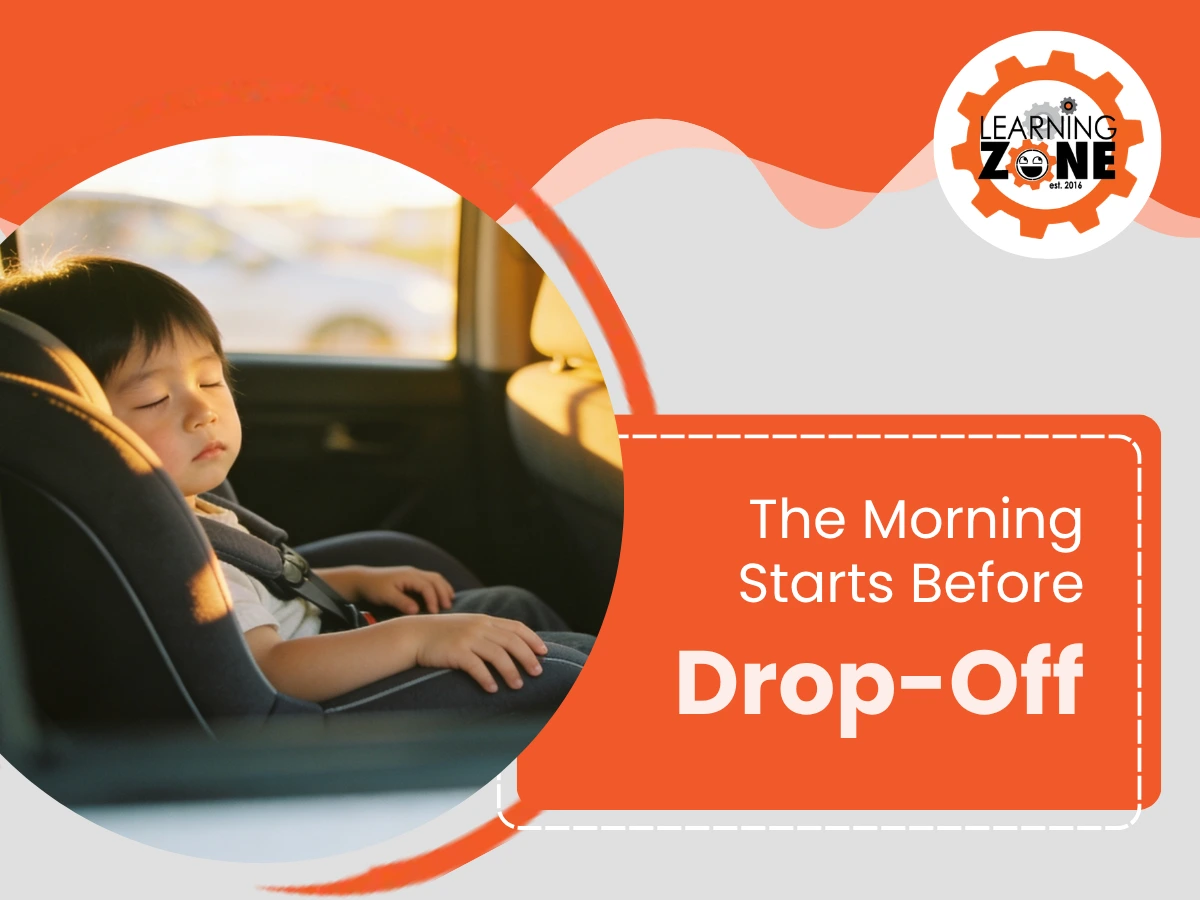
A commute is not just a drive. For a young child, it can be a long stretch of waiting, buckling, unbuckling, and shifting from one part of the day to the next.
A 10-minute ride feels very different from a 40-minute one. So does a calm route compared with a stop-and-go drive, where everyone already feels rushed. Some children handle that well. Others arrive needing extra time, extra comfort, or a gentler start before they are ready to join the classroom.
That does not mean a longer commute can never work. But it does mean the commute deserves more weight in the decision.
When children arrive tired, hungry, or overstimulated, the start of the day can feel harder. A stressful commute can show up in clingier drop-offs, slower transitions, or a child needing more time to settle. At Learning Zone, we see how much easier the day goes when children arrive with enough energy for learning and play.
The best daycare location for working parents is not always the closest to home. It’s the one that actually makes your day more manageable.
For some families, that means staying close to home. A shorter morning drive can make a big difference when children are still waking up, breakfast runs late, or the day already feels full. A location near home can also be easier for grandparents, sitters, or a second parent who may need to help with pickup.
For other families, a childcare center closer to work is the better fit. Knowing you are just a short drive away can bring peace of mind, especially if your child gets sick or needs you during the day. It can also make those late pickup days feel a little less stressful.
Sometimes the best answer sits somewhere in between. A center on the natural route to work can help you avoid backtracking and make the day flow more smoothly.
This is where the details matter. A school on John R. Rice Blvd may be a great fit for one Murfreesboro family because it aligns well with the rest of the morning. For another family, a location closer to home or work, or somewhere along the route, may make the whole week feel easier to manage. The right choice is the one that supports the rhythm your family actually lives.
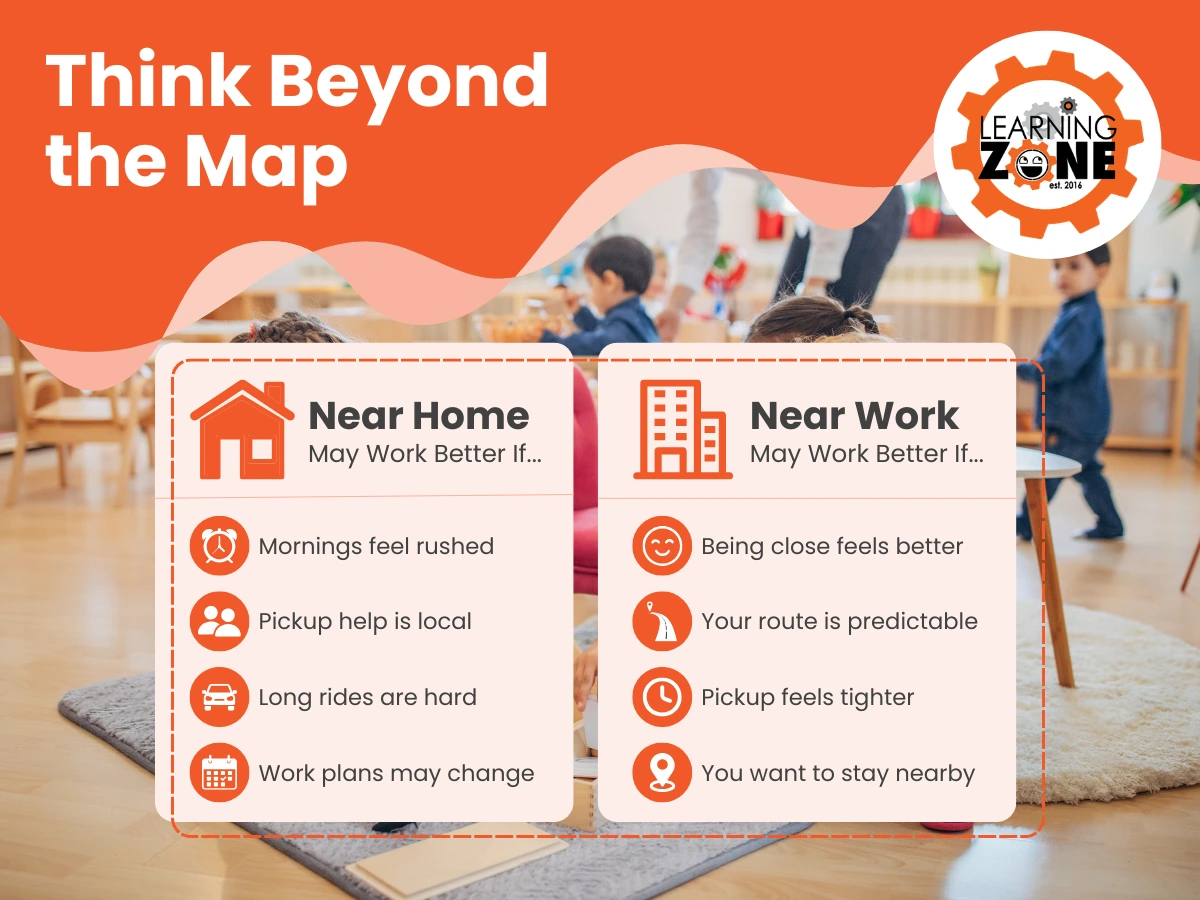
Even when you narrow your options down, this part can still feel harder than expected. On paper, one location may look more convenient. In real life, the better fit usually depends on what your week looks like when one parent works from home, a meeting runs late, your child gets sick, or pickup suddenly needs to shift to someone else.
Those are often the moments when the right choice becomes much clearer.
A center near home may be the better fit if:
A center near work may be the better fit if:
This is also where communication becomes part of the logistics. When you are apart from your child for most of the day, staying informed matters. That is why, at Learning Zone, we use the Procare app to share updates, photos, and daily communication so families can stay connected without having to guess how the day is going. That kind of communication does not just feel helpful. It can make the workday feel lighter because parents are not carrying as many questions in the back of their minds.
A daycare schedule is about more than opening and closing times. What really matters is how the school fits into the parts of the day that already feel tight.
For most families, that pressure shows up in the same places. It is the 30 minutes before you leave the house. It is the drop-off handoff when everyone is watching the clock. It is that stretch between pickup and dinner, when your child is hungry, you are tired, and the day is not quite done yet.
That is why it helps to think beyond a center’s posted hours and picture what the day actually feels like.
How long does parking take when you are carrying a bag, a lunch box, and a child who suddenly does not want to get out of the car? What happens if you arrive right before breakfast or group time? How does pickup feel at 5:05, when traffic is slow, and everyone is running low?
Those details matter because they shape the mood of the whole day. A preschool should help life feel steadier, not more rushed.
Location can matter more than you expect. A family driving across Nashville needs something different from a family staying near home in Madison, Clarksville, or Spring Hill. The best fit is one that works with your route, not just what looks good on paper.
Inside the classroom, the rhythm of the day matters too. Our C3 Curriculum is built around Curiosity, Creativity, and Comprehension, which helps create a school day that feels purposeful, hands-on, and easier for children to settle into. When the day has a clear flow, children often move through transitions more smoothly and feel more settled, even after a busy morning or a harder drop-off.
When touring a preschool, it helps to look beyond the polished classroom. Instead of focusing on the artwork, curriculum board, or reading corner, pay attention to the parts of the day that will make your life easier or harder.

At the end of the day, a strong program is important, but what most families really need is a school that fits into their real lives. A place that fits the route you already drive, a classroom that feels welcoming at drop-off, and a daily rhythm that helps the morning feel less rushed and the evening feel a little easier.
That is where Learning Zone can make a real difference.
We know families are balancing a lot. Work schedules. Traffic. Pickup windows. Meals. Nap routines. All the little things that can make a day feel smooth or completely off track. That is why we work hard to create a school experience that supports your child’s growth and your everyday routine.
At Learning Zone, that support shows up in ways families can actually feel:
For many families, the right preschool is the one that helps the whole week feel more manageable. A smoother drop-off. A less stressful pickup. A routine that feels a little steadier for everyone. If that sounds like what your family needs, visit the Learning Zone location that fits your route best and see whether it feels like the right fit for your child and your everyday life.