
The first time you drop your child off at daycare, your heart does something strange. You smile, you wave, and then you sit in the car for a minute wondering if you made the right choice. Every parent knows that feeling. The question underneath it is always the same: Will my child be truly cared for here, or just watched?
That single question changes everything about how you search for care. And in a community like Smyrna, where families have plenty of options, finding the right fit matters more than finding the closest fit. So let’s talk about what actually separates the< Best Daycare Centers in Smyrna from the ones that simply fill the hours until pickup.
A list of names and star ratings only goes so far. A five-star review tells you a parent was happy. It doesn’t tell you whether the environment was actually designed to help a child grow.
The best centers share a few things in common. They treat children as capable individuals, not a group to be supervised. They follow a real curriculum, not a loose schedule of snack and nap. And they build genuine relationships, so your child feels known from the moment they walk in.
That trust gets earned every single day, from how a center welcomes your baby in the infant room to how it prepares your child for the next big step in Pre-K.
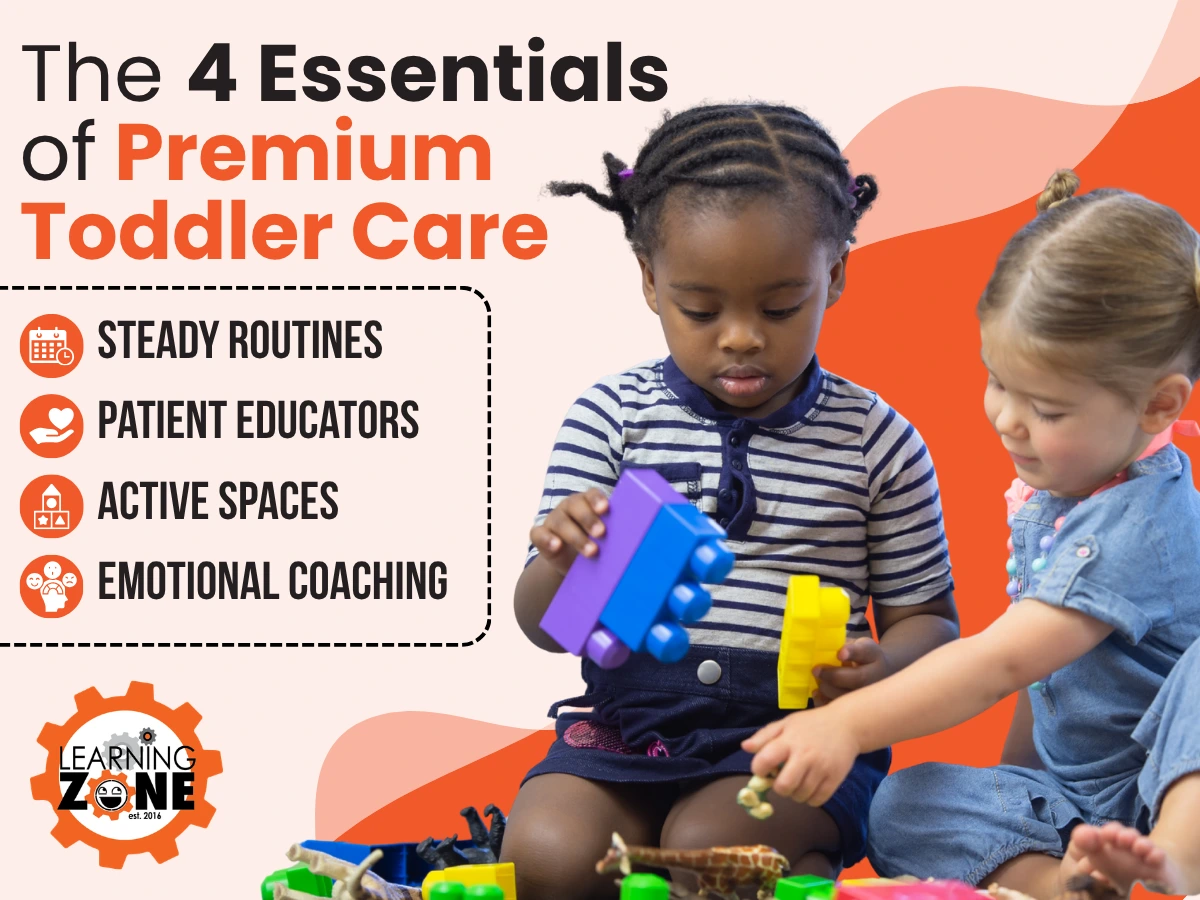
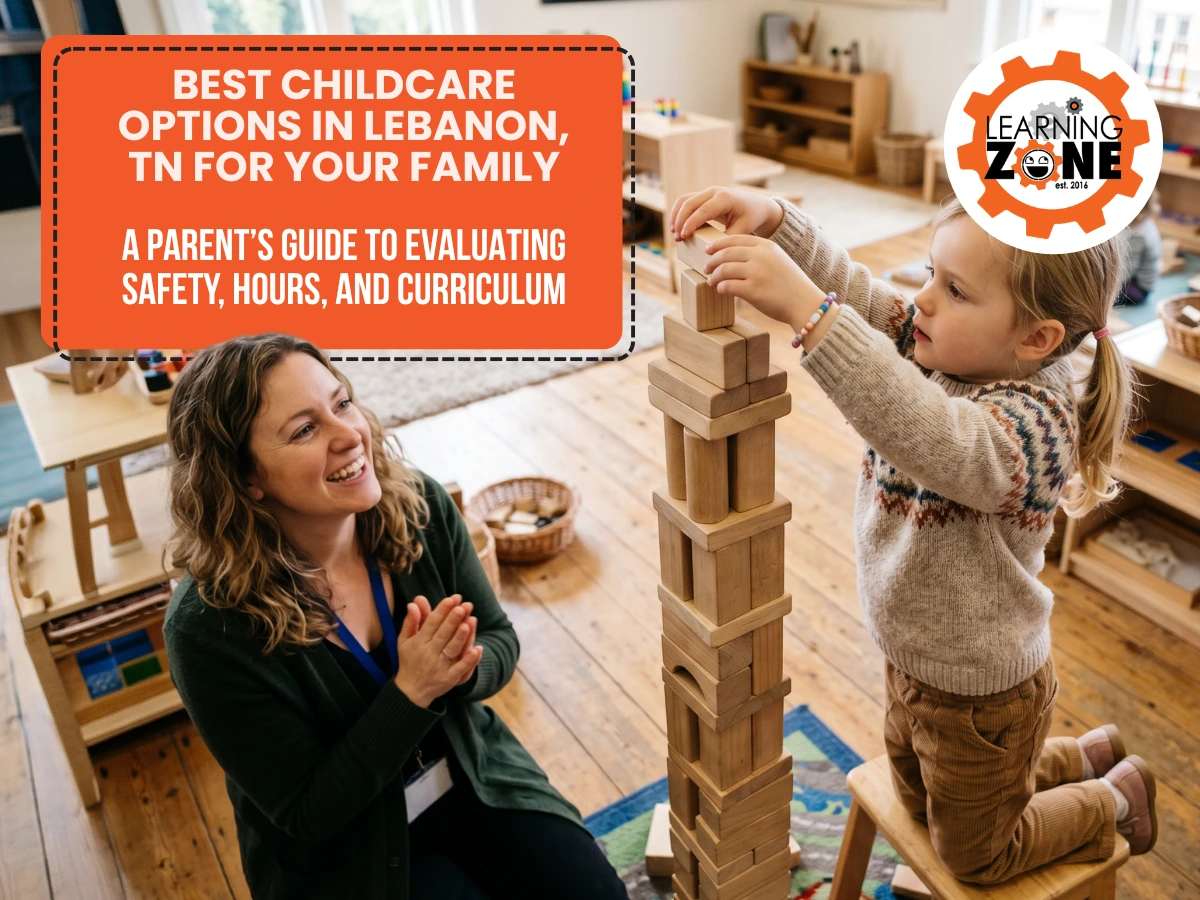
Here’s something that surprises many parents: a toddler stacking blocks isn’t “just playing.” They’re testing balance, predicting outcomes, and learning to manage frustration when the tower falls. Early childhood educators see it every day: young children absorb far more through active, hands-on experiences than through passive worksheets.
That’s the whole idea behind play-based learning. It looks like fun because it is fun. But behind every activity sits a clear developmental purpose.
The difference comes down to intention. In a strong program, someone thoughtfully designed that block area, chose those specific materials, and knows exactly what skill each activity builds. That intention is what turns everyday play into real, lasting growth.
Touring centers can feel overwhelming, especially when they all seem to say the same things. Use this quick checklist to cut through the noise and spot real quality.
If a center checks these boxes, you’ve likely found one of the best places in the area for your child.
Cost matters, and it’s fair to ask about it early. When families look for affordable daycare in Smyrna, we encourage them to weigh value rather than just price. The cheapest option often means larger groups, less individual attention, and no real curriculum. The most expensive isn’t automatically the best either.
The smarter question is this: What does my child actually receive for the investment? A program with a purpose-built curriculum, small ratios, and genuine relationships delivers far more than basic supervision at any price. We’re always happy to talk openly about programs and schedules that fit your family’s needs.
By now you have a checklist. So instead of repeating buzzwords, let’s walk through what a real day at looks like, from the moment your child hangs up their backpack to the last hug goodbye. Every point below maps to something you can actually watch happen during a tour.
Ask most centers what their teachers do, and you’ll hear “supervise” or “watch the room.” Ask us, and you’ll hear something different. We call our teachers Education Engineers because they design each day the way an engineer approaches a problem: with a plan, a purpose, and room to adapt when a child surprises them.
That looks practical in the classroom. When a preschooler gets stuck on a stubborn puzzle, an Education Engineer resists the urge to just fix it. They ask one good question, then wait. That pause is where the real learning lives. And with small group sizes, your child gets that kind of one-on-one attention many times a day, not once a week.
Our learning framework has a name and a shape. It’s the C3 Curriculum, built around three ideas we return to constantly: Curiosity, Creativity, and Comprehension. Rather than pushing every child through the same track at the same speed, C3 flexes to fit the learner in front of us.
That flexibility matters because kids absorb the world in different ways:
If your child races ahead in some areas and takes their time in others, that’s not a problem to fix. It’s simply where they are, and C3 has space for it. No one gets rushed, and no one gets left waiting.
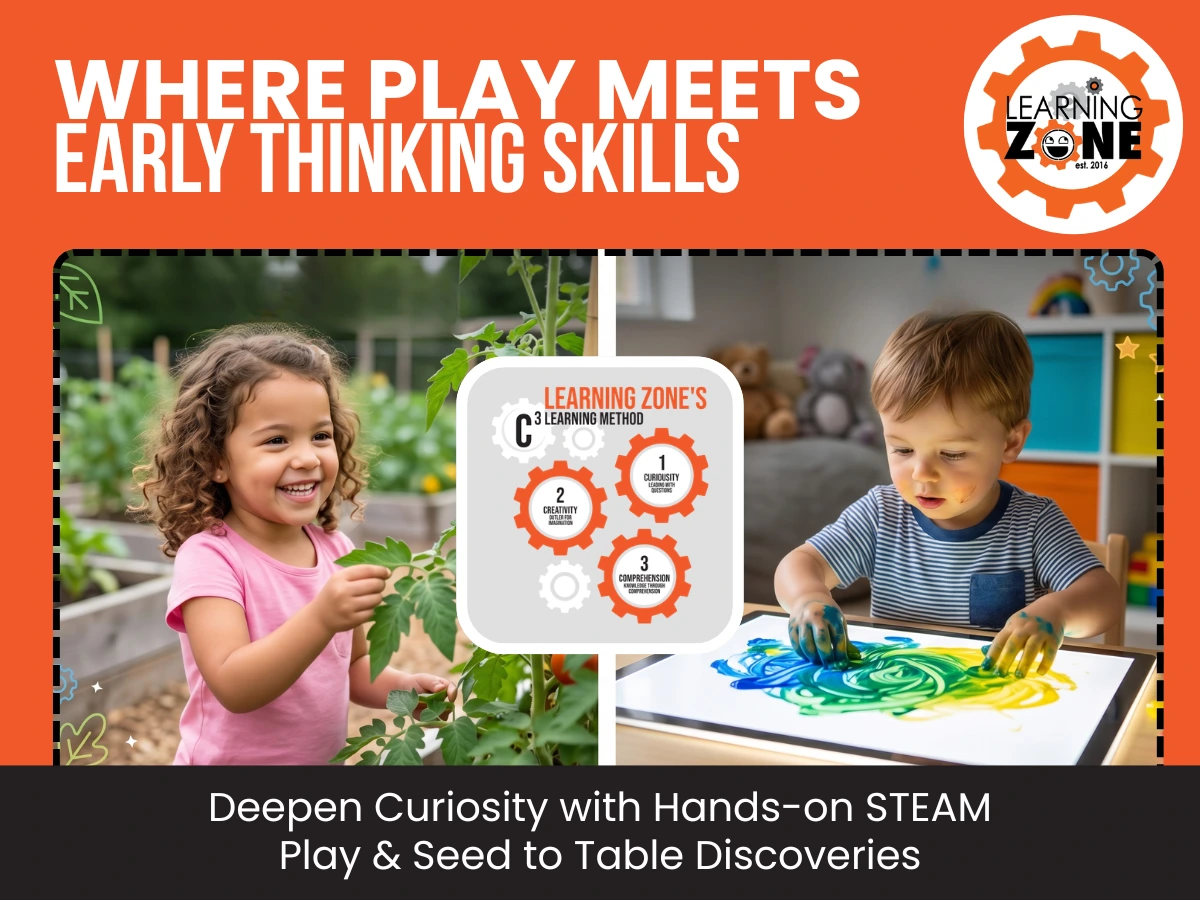
Science, Technology, Engineering, Arts, and Math sound intimidating on paper. In our classrooms, they’re just Tuesday. STEAM lives inside the play your child already loves, so the learning arrives without a worksheet in sight.
Watch closely, and you’ll spot it everywhere. A tower that keeps toppling teaches about balance and cause and effect. A cup of water and a handful of objects become a sink-or-float experiment. Sorting buttons by size and color is early math dressed up as a game. Our Education Engineers simply nudge these instincts a little further each time.
Some of the best lessons here don’t happen at a table at all. They happen in our outdoor Grow Zones, where children plant seeds, water them, and check on them day after day. It’s patience and science rolled into one, with muddy hands as proof of the work.
The payoff comes at snack time. Kids taste herbs they smelled growing, and vegetables they helped tend, which makes trying new foods feel like a reward rather than a chore. Along the way, they pick up teamwork, responsibility, and a quiet pride in growing something real. Our Seed to Table program turns a garden into a year-round classroom.
For our youngest ones, everything begins with trust. We welcome babies from 6 weeks, and in those early months, our focus is simple: follow your baby’s lead. Feeding, napping, and playtime bend around their rhythm, not a rigid clock.
Gentle sensory play fills the rest of the day, from soft textures to quiet songs. Because the same familiar caregivers stay close, your infant learns that this new place is safe long before they have the words for it.
Your child won’t outgrow us. Our programs shift as they do, meeting each stage with the right mix of freedom and structure.
Trusting someone new with your child is hard, and we never take that lightly. Our building uses secure keypad entry and video monitoring, so only the right people come and go, keeping the day calm and safe.
Connection is the other half of that reassurance. Through the Procare app, you’ll get photos, updates, and little moments sent straight to your phone, so the workday never feels like a total blackout from your child’s world. And as a nationally NECPA-accredited center, we’re held to standards that go well beyond the basics, giving you one less thing to wonder about.
We welcome infants as young as 6 weeks, support them through dedicated toddler rooms, and guide them all the way up to our structured Pre-K readiness program.
Regular playtime lets children play freely with little guidance. Play-based learning is intentional. Our Education Engineers design the room, select the materials, and gently guide children toward milestones such as fine motor coordination and pattern recognition, all through activities kids genuinely enjoy.
Our facility uses secure keypad entry and video monitoring, and the Procare app sends you updates and photos throughout the day. You stay connected to your child’s day from anywhere.
We hold national NECPA Accreditation, which means our program is independently reviewed against rigorous standards for education, safety, and care.
Ask about group ratios, the curriculum framework, safety systems, and how teachers handle different learning styles. The answers will quickly tell you whether a center offers real early education or just basic supervision.
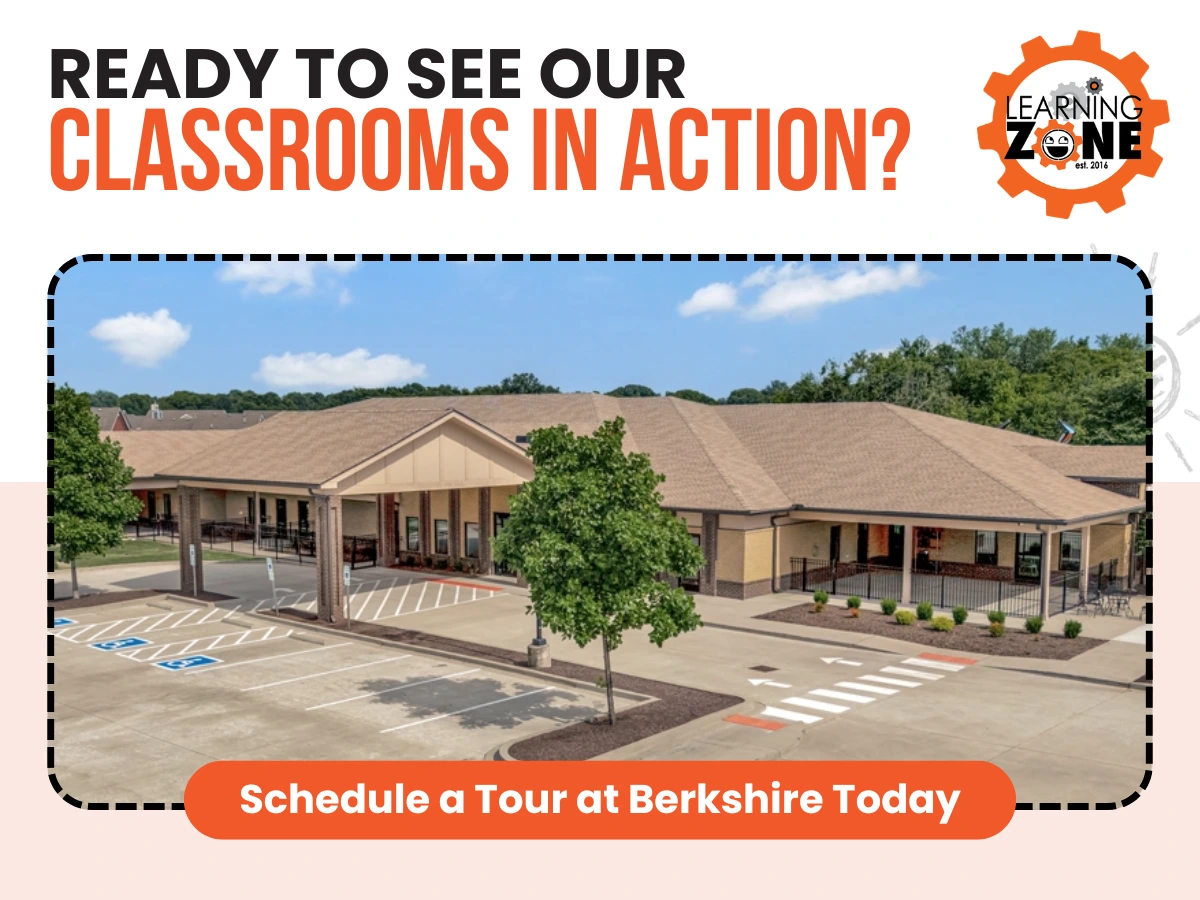
You’ve read the checklist. You’ve compared your options. At some point, though, the decision stops being about features and star ratings and starts being about a feeling: the one you get when you picture your child walking through the door each morning.
Come spend a little time at Learning Zone at Smyrna. Peek into a classroom while the C3 Curriculum is in motion, watch a STEAM activity turn a pile of blocks into a lesson nobody realizes they’re learning, and notice how small our groups really are. When there are fewer children per teacher, you see it right away in how calm and connected the room feels.
You’ll also meet the Smyrna families and teachers who make this place feel less like a facility and more like a corner of the community. A quick visit tells you more than a week of research ever could.
Ready to trust your gut? Schedule a tour at Learning Zone at Smyrna and see whether this feels like the right home for your child. We think you’ll know the moment you step inside.