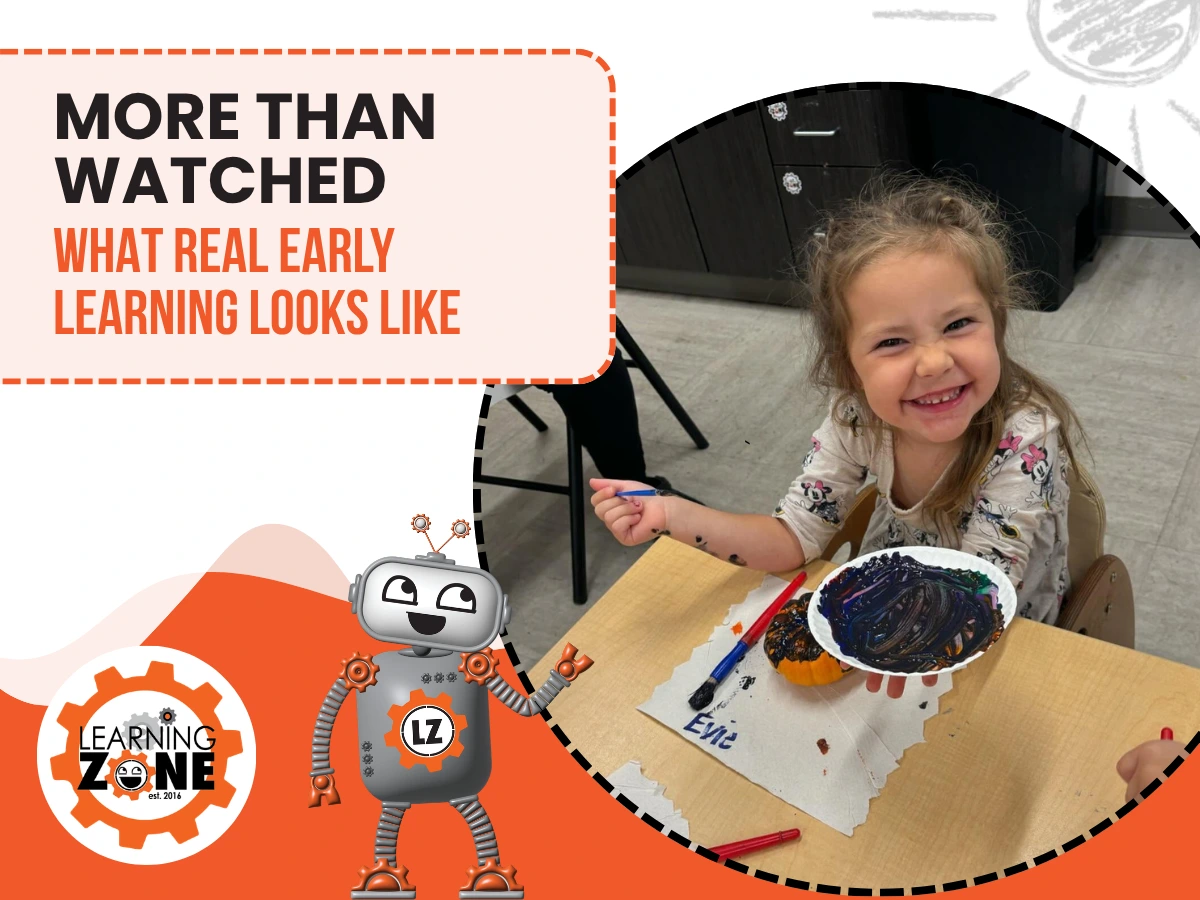

At Learning Zone, our curriculum uses hands-on play and activities to develop skills. Some of our activities in February facilitated developing small motor control. In our 2-year-old age group, our hands-on project focused on creating our own clothing. Some very imaginative, young fashion-designers-in-the-making emerged. We began with a large brown paper bag that had arm and neck holes cut out to make a “t-shirt.” First our little designers painted their shirts and then decorated them with scraps of fabric, buttons, glitter, and more.

This activity helped develop independence, imagination, attention span, and organization. When they finished the t-shirts, we discussed the many different types of shirts—long sleeve, short sleeve, tank tops, etc. Then we discussed the types of weather in which to wear each type of shirt. These discussions helped develop communication skills.
Our Pre-K group used their investigative skills to explore the many types of fasteners used in clothing. They discovered buttons, Velcro, laces, snaps, zippers, and more. They also practiced using these fasteners, which had the effect of boosting their self-confidence and aiding in hand-eye coordination.
Research shows that in their early years, children develop cognitive and social skills through imagination and hands-on interaction. That’s why imaginative play is such a large part of our curriculum at Learning Zone, and why our students thrive. Through engaging, hands-on activities, we encourage your children to explore, ask questions, discover and experiment.
Learning Zone Child Care is one of the most unique preschools and daycares in Murfreesboro, Nashville, and Mt. Juliet. And if you are googling daycares Gallatin, TN you’ll also find that we are opening a new center there very soon. We serve families with children from 6 weeks to five years of age. We invite you and your child to become part of our community.

Yes, and that’s intentional. Many families start reading to understand what quality early childhood education looks like and what children need at different stages. Even if you’re still exploring options, our blogs can help you feel more confident about what to look for in a childcare center and what questions to ask during tours.
Yes. Many early childhood challenges are a normal part of development, but they can still feel exhausting at home. You’ll find supportive strategies that respect your child’s emotions while also helping you set clear, age-appropriate boundaries. We also share guidance on common transitions, such as starting daycare, moving to new classrooms, and potty training readiness.
Not at all. Every post is designed to stand on its own, so you can jump into whatever topic feels most helpful right now. Many parents treat the blog like a resource library and return whenever a new stage or challenge arises. If you’re not sure where to begin, starting with the most recent posts is a great option.
New posts are added regularly, especially around the topics parents search for and ask about most. Some seasons focus more on routines and family schedules, while others dive deeper into behavior, development, and early learning. The best way to stay up to date is to check back often or subscribe when available.
Young children learn best through play because it’s how they naturally explore, practice, and repeat skills without pressure. Play strengthens language, early thinking skills, creativity, and social development in a way that feels enjoyable instead of forced. The blog helps explain what meaningful play looks like, so you can recognize learning even when it looks like fun.
No. Our content is meant to be helpful and informative, but it’s not a substitute for professional guidance. If you ever have concerns about your child’s health or development, it’s always best to speak with your pediatrician or a qualified specialist. Think of this blog as supportive education and a steady place to start.